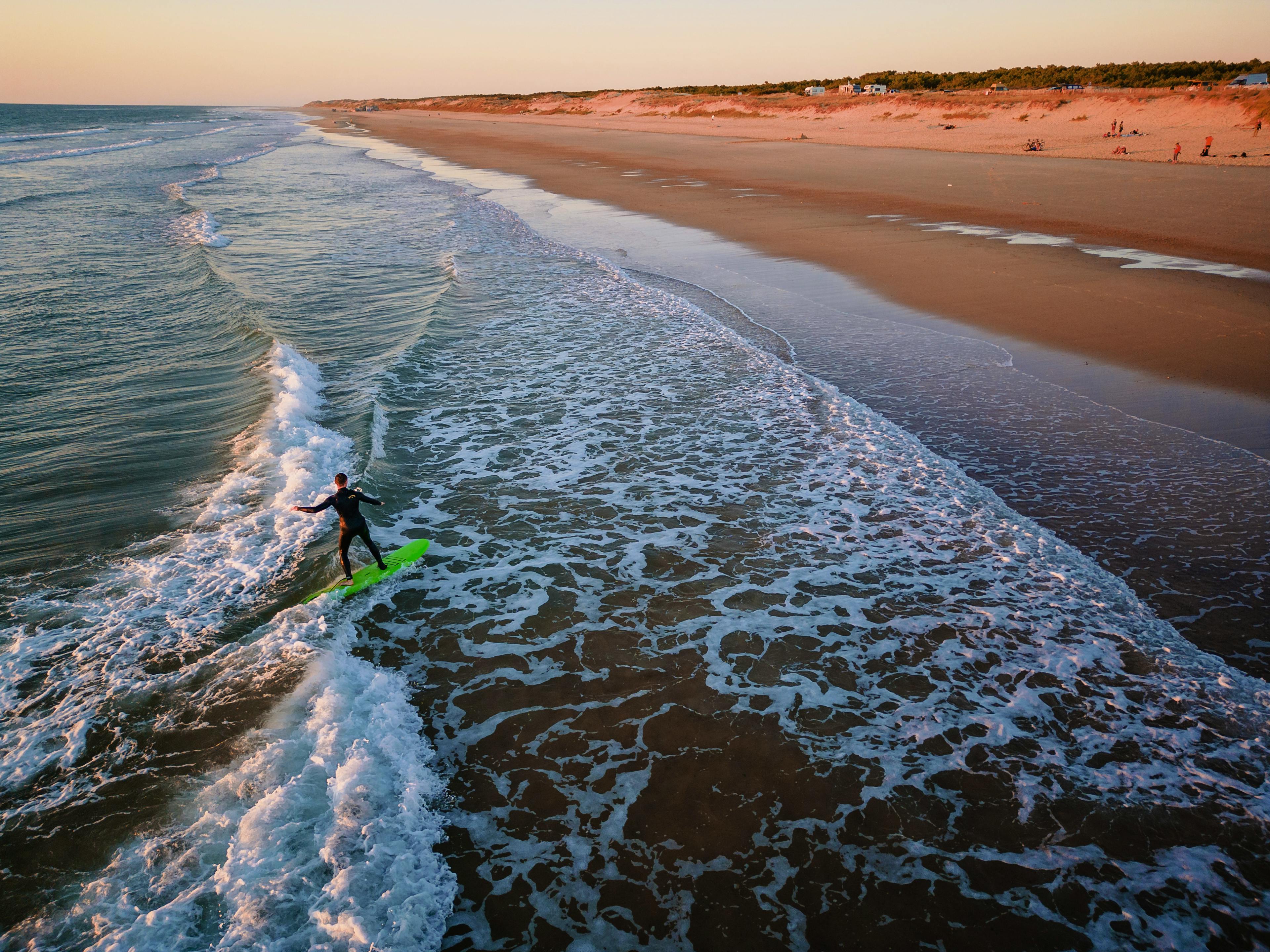

The French Atlantic coast is known for its long sandy beaches and impressive waves, creating ideal conditions for surfing. Whether you want to experience adrenaline-pumping waves here or at one of our other surf centres around the world, you'll need patience, good balance and strong shoulder and back muscles. And of course, enough courage to swallow a few mouthfuls of seawater along the way! It can be a challenge, but the overwhelming feeling when you master your first wave is unbeatable. Surfing is something anyone can learn!
A typical day
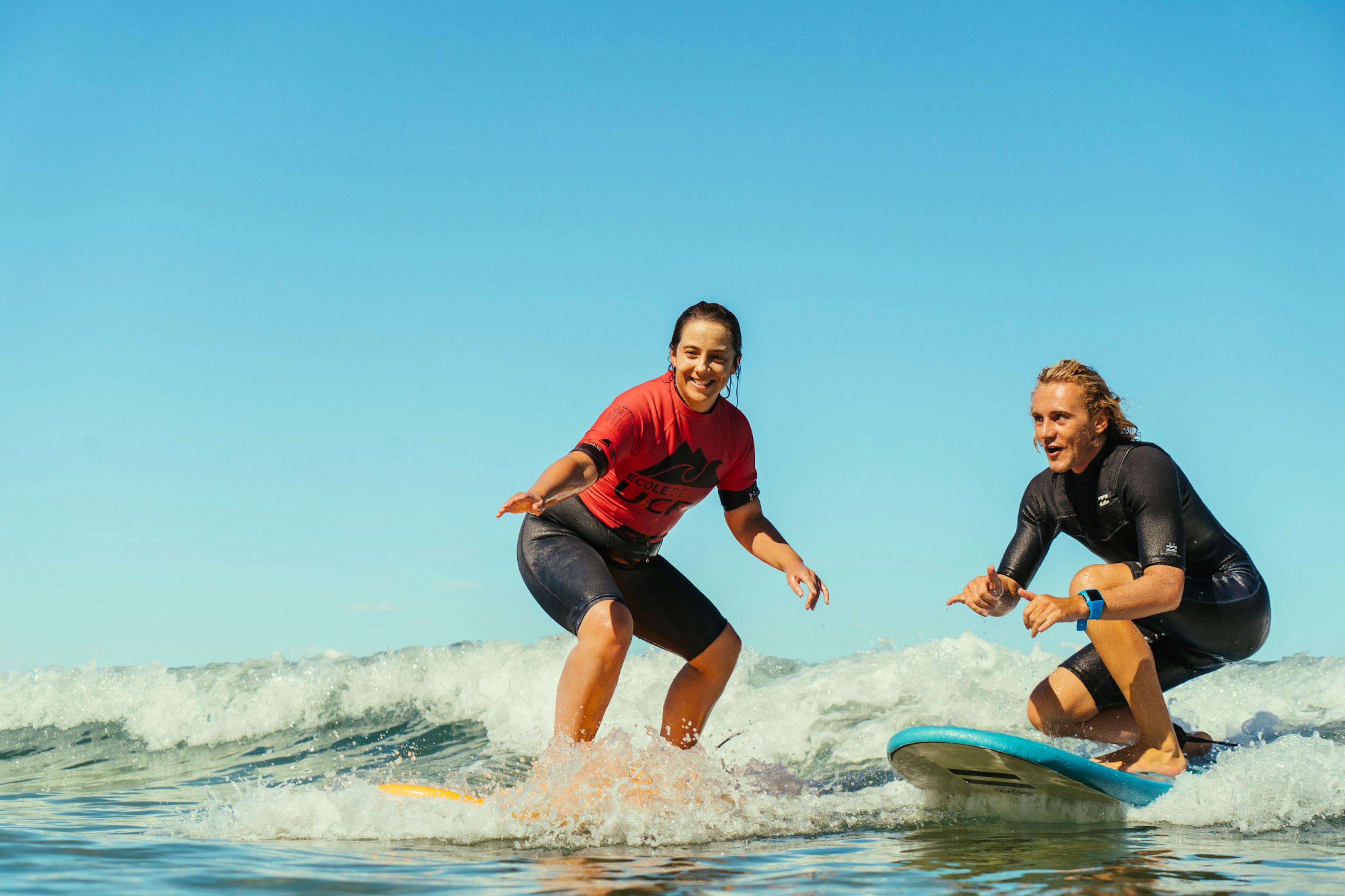
Each session lasts about 2 hours, and the teaching is adapted to the individual and kept intuitive. For beginners, the day starts on land with a run-through of basic safety rules and techniques, followed by practical exercises in gentle waves. The focus is on developing a feel for the board and the sport. For more experienced surfers, we focus on choosing the right waves, managing fatigue and being able to surf for as long as possible with minimal effort.

Types of waves
Beach breaks
This is when a wave moves from deep to shallow water over a sandy seabed. These types of waves are best suited to beginners and recreational surfers, as they generally break with less force than reef breaks and are a little kinder to those trying to master them. Although the waves are usually short, the risk is much lower because you fall onto sand.
Reef breaks
Places where waves break over a coral reef or a rocky seabed are usually better suited to intermediate or advanced surfers. These waves typically break quickly and with more force than beach breaks in shallower water. However, the shape of the reef and variations in depth can lead to waves of varying shape, size and power. Typically, with these reef breaks the waves travel from deeper water onto a shallow reef, creating a wave that demands a fast and exciting take-off from the surfer.
Point breaks
These occur when waves break against and follow along a rocky point, resulting in a wave that moves in only one direction. These waves are often some of the longest and easiest to ride, making them ideal for fine-tuning your surfing technique. They produce long rides with open wave faces, perfect for practising turns and gliding along the line of the wave. Point breaks are particularly suitable for intermediate surfers who have mastered techniques such as the "bottom turn" and can surf sideways along the wave.

When & where should I go?
March - May
Head to one of our destinations in the Canary Islands, Fuerteventura or Lanzarote! During these months the Atlantic swells are usually more consistent and powerful, resulting in better waves. The winds are also more stable and tend to be more favourable for creating good surf conditions.
May - August
For this period we recommend Bénodet, Bombannes or Port d'Albret. These months are especially good if you want to surf in France, as the sea is warmer and the winds are usually milder!
September - November
Head to one of our destinations in the Canary Islands, Fuerteventura or Lanzarote! During these months the Atlantic swells are usually more consistent and powerful, resulting in better waves. The winds are also more stable and tend to be more favourable for creating good surf conditions.
Choose the right Wave surfing level

2

3
1


Where can you go?
Destination


UCPA - Freely translated to English as "National Federation for Sports and Outdoor Centers" - has a history of over 50 years. It is, in short, a non-profit, all-French organization supported by, among others, the French state. The purpose is to give ordinary people the opportunity to learn and develop in one or more sports together, in pleasant and unpretentious forms. The organization has about 80 centers in France and the West Indies, 28 of them are located at well-known winter sports resorts in the French Alps.
Quick dial
About us
Good to know
Ski Holidays
EPIC Ski StudentSki Beginner CourseSki PisteSnowboard Beginner CourseSnowboard PisteOff-piste Ski - Level 1Off-piste Ski - Level 2Off-piste Ski - Level 3Off-piste Snowboard - Level 1Off-piste Snowboard - Level 2Off-piste Snowboard - Level 3Randonnée - Ski TouringFamily WeeksSenior WeeksSolo WeeksShort Breaks© 2026 UCPA Travel AB.